
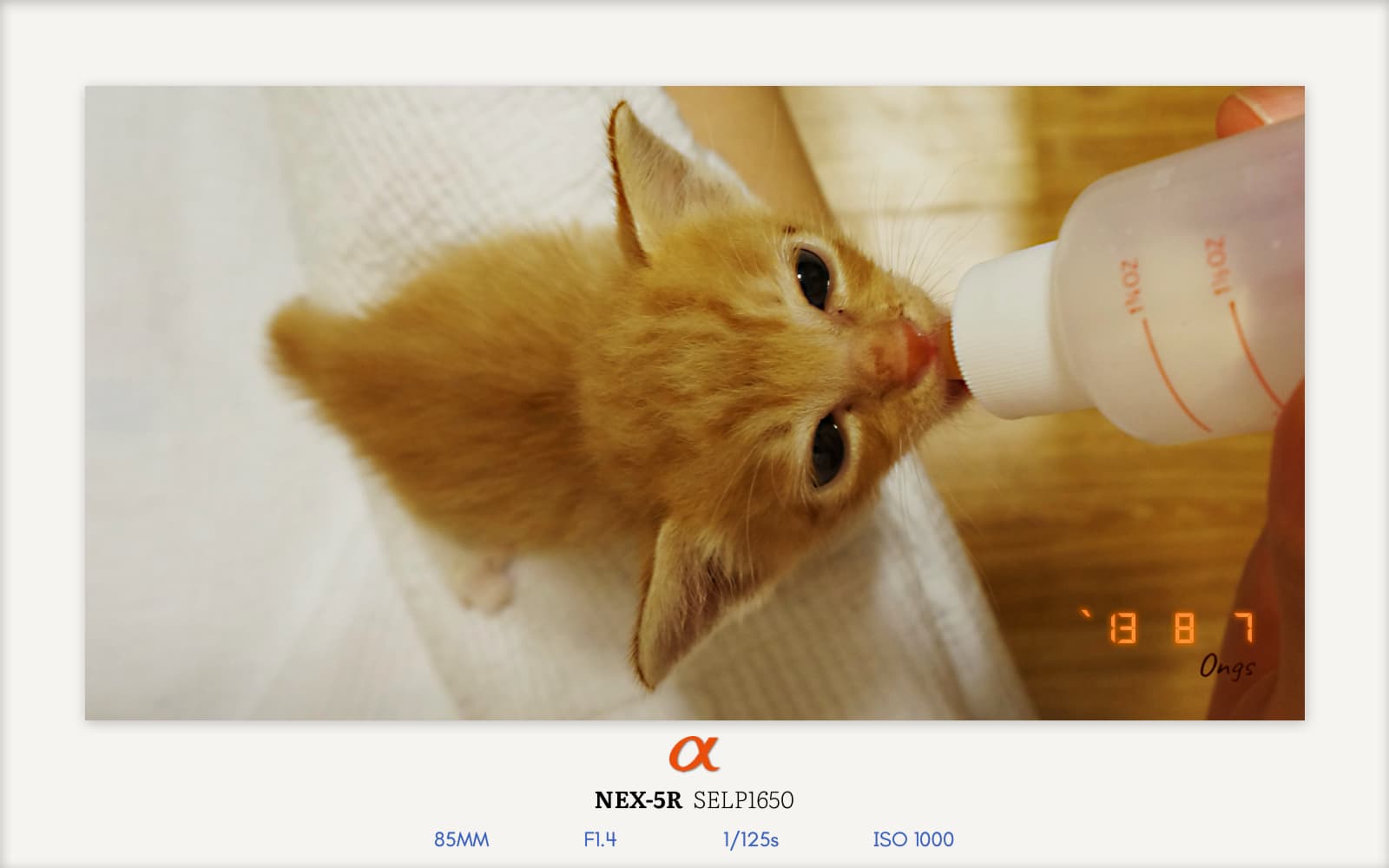

It must've been a slow afternoon when the wish first came up. I was flipping through an old photo album when a few Date Back prints stopped me. The small orange timestamp along the bottom edge held me longer than the photographs themselves. Not the picture, not the subject. Just that little line of numbers.
Exifmark started, more or less, on that afternoon. The first version printed only a timestamp, the way a film camera does.
From the timestamp on, we kept wanting more from the EXIF. The brand logo, the aperture, the shutter, the lens. We brought those onto the photograph, as frames, as watermarks, as stamps. Each had to be refined and carefully made, taking nothing from the picture beside it.
What follows is each mark in turn, in the order it came in. The ones with a story behind them carry it just under the picture. The others let the picture speak on its own.
Date Back Mark
The small orange line from the opening was the first mark we ever made. Date Back Mark carries the date-back function of a retro film camera over directly, leaving only the date in a corner of the photograph. No other letters, no other information. Everything that came after began here.
Plain Mark
After Date Back came Plain Mark, the first design to set the full EXIF onto a photograph. No frame, no border, just text resting directly on the picture. It is the quietest of all the marks, taking nothing from the photograph itself.
The photograph above is a patch of wild daisies. One spring afternoon, almost on a whim, it went up on Instagram, and that single frame brought in the first follows our account ever had. The small flowers had quietly drawn people in, and the moment stayed with us long enough that the Exifmark logo came to take the shape of a daisy.
Framed Mark
A printed photograph keeps a clean white border that the picture itself never spills into. Framed Mark keeps that border around the picture, with the information settling in the margin and the photograph staying unmarked beneath. The feel of a print on paper comes with it.
Editorial Mark
A magazine article opens with a photograph and the text alongside it. Editorial Mark takes after that opening, the picture as the lead image and the information as the orderly text running beside it.
Signature Mark
The brand etched into a camera's body stays beside the photograph long after the shutter has been pressed. Signature Mark sets that brand clearly beside the picture, making plain which camera the frame came from.
Receipt Mark
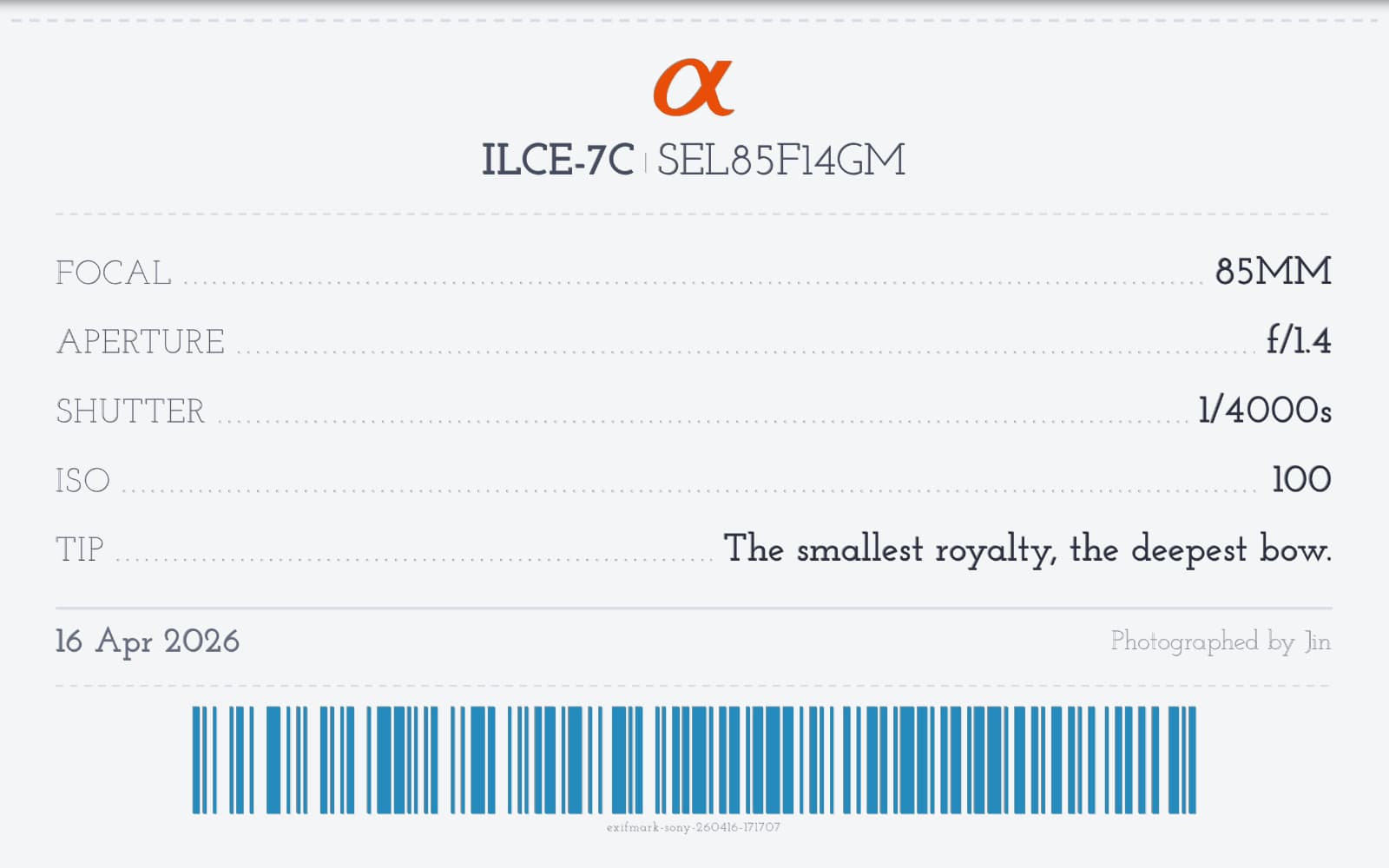
The idea came from a receipt one afternoon, the small slip of paper a waiter handed over after a lunch bill. Dotted leaders connected the shop name to the prices, and a barcode sat at the very bottom. We carried that shape down beneath the photograph, and the picture began to read like the record of a single transaction.
Slide Mark
These days, it's the kind of scene that only turns up in retro-toned cinematic visuals. A dark room, a slide projector, paper-mounted 35mm frames being slipped in one by one. Slide Mark borrows that shape directly, turning a photograph into a single slide held inside its mount. The unhurried rhythm of flipping through them, one at a time, comes along with it.
Old slide carousels are mostly tucked away in attics now, the tray still clicking one notch at a time when someone gets curious. Slide Mark keeps a little of that pace, holding one frame at a time before moving on to the next.
Studio Mark
A photograph hung on a gallery wall has a small label tucked just beside it. Studio Mark holds onto that arrangement, with narrow bands above and below the picture, the camera and shooting details laid out tidily. The picture rises into a work of its own, while the information stays beside it like a small label.
Instant Mark
There is a moment, after someone presses the shutter on an instant camera, when the print slowly takes on its colors. Instant Mark takes the shape of that single frame. A thicker margin sits below the photograph, with the brand and camera centered on top of it. The picture closes like a print just out of an instant camera.
Folio Mark
A photograph takes time to settle into a photographer's own work, with the choosing and the refining that follows. Folio Mark holds the shape of that final tidying. The shutter icon at the top points to the moment of capture, the camera icon at the bottom to the tool that made it, and along the edges of the photograph the camera, title, and shooting details quietly fall into place.
Prologue Mark
When you open a book, the first thing to meet you is a single page with the title set large across it. Prologue Mark borrows the shape of that opening leaf. A title sits across the photograph in tall letters, with a short date following beneath. The picture, on its own, becomes the first page of a work.
Marquee Mark
At the center of an old cinema's lit marquee, the day's feature stood the largest. Marquee Mark takes that shape, gathering the camera brand, the model, and the shooting details together at the center beneath the photograph. The picture rests on the name of the camera that made it.
The cinema marquees that survive these days are mostly restorations. The bulbs are still bulbs, and a fair number of them no longer light. What remains is the shape, and the title at the center that someone once tilted their head up to read.
Focal Mark
The first thing a photographer often wants to know about a frame is the focal length. Focal Mark answers that first, setting the number in the largest type below the picture and letting it lead the impression. The aperture, shutter, and ISO follow alongside in smaller labels.
Orbit Mark
In the control rooms of the Apollo era, a single planet would sit at the center of a monitor while the surrounding data scattered across its edges. Orbit Mark borrows that arrangement, holding a photograph at the center like the planet itself, with the camera and shooting details cast around it along its orbit.
The actual screens from the Apollo missions live in museums now, behind glass. The data on them, frozen at the frame someone last read, has the same quiet that comes off a single photograph held still.
Polaroid SX-70 Mark
Polaroid SX-70 prints used to gather on people's desks, shaken to bring the colors out. Polaroid SX-70 Mark keeps that shape across in full — the thin top edge, the thick bottom one, the handwritten line in the lower margin, the small colored stripes near the corner. A photograph turns into a single Polaroid frame.
Some of the SX-70 prints we have around the studio have faded a little, the colors slightly off from what we remember. The handwriting in the lower margin has held up better than the picture in some of them. The mark keeps both alongside the photograph, fresh on a digital frame.
Lookbook Mark
A fashion lookbook sets one piece in the middle of each page and lets the styling notes run along the edges. Lookbook Mark takes after that page, lining the camera and shooting details neatly along the margins of the photograph.
Catalog Mark
A museum catalogue page holds a single work in the center, with the writing about it settled on the same page. Catalog Mark follows that arrangement, the writing set directly on the photograph and the camera details trailing along the bottom edge. The picture lands as one entry in the catalogue.
Viewfinder Mark
Just before the shutter drops, the viewfinder is crowded with small markings. A set of AF brackets in the middle of the frame, the camera details along the corners, the exposure compensation and white balance among them. Viewfinder Mark carries that screen across, turning a finished photograph back into the moment of taking it.
The shelf is not a closed book. We do not yet know what the next mark will be, only that on some slow afternoon, on someone's desk, another shape will turn up.
If a different shape comes to mind for you, one you would want beside a photograph of your own, we would be glad to hear from you through our contact page. The next mark may begin with a single line you write.
You can find every mark on this shelf in Exifmark.
To anyone who has kept one of these small things beside a photograph, thank you. We hope it stays beside one a while.
Keep reading

Stories
The Blossoms Were the Same for Everyone
Huiu Jeong-ro, Seoul at peak bloom. The crowd moved as one, but each person was having their own spring. An EXIF watermark beside each frame keeps the day.
Purrs
Every Shutter Leaves a Receipt
A photograph and a receipt are closer than they look. The new Receipt Mark in Exifmark borrows the form of an old paper slip, almost line for line.

Stories
Introducing CatBrains
We build small, sharp apps for people who care about how their tools feel. This is the blog where we say what we're shipping, why we shipped it, and what we noticed along the way.